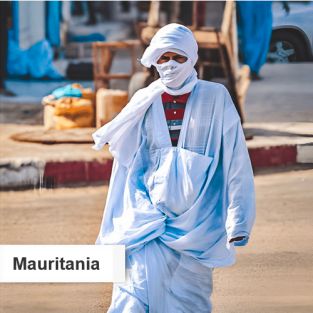
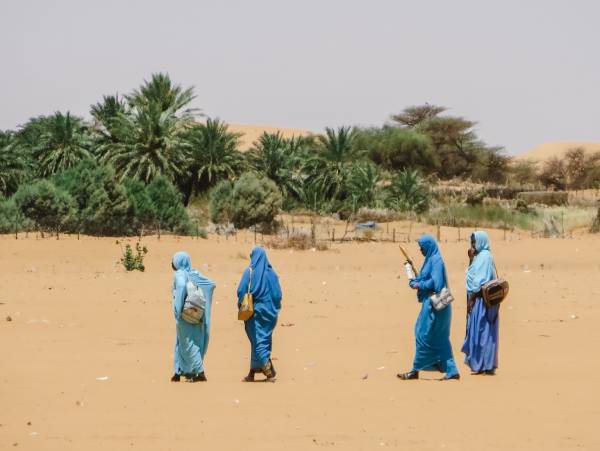
At the crossroads of the Arab North and sub-Saharan Africa, Mauritania is a vast but sparsely populated country of some 3 million inhabitants whose capital Nouakchott is on the Atlantic coast. Ancient cities in the interior were important Saharan trade centers from the Ghana Empire through the expansion of Arab civilization and into modern times. European colonization came relatively late to Mauritania, which at its independence from France in 1960 was still administered from St. Louis, Senegal. Today's capital, Nouakchott, was a small outpost midway between that city and Port Etienne, now called Nouadhibou, Mauritania's commercial capital.
At independence, much of the country's population followed a nomadic lifestyle or worked in agriculture in remote areas mostly untouched by colonial administration. Traditional slavery was formally abolished in 1980. As a result of centuries of this practice, Mauritanian society is characterized by former slave-owning groups of Arab-Berber origin, known as White Moors, and the Black Moor descendants of their liberated slaves.
Ethnic tensions persist in Mauritania. In April 1989 violence broke out between communities, stemming from a schism between Arab-Berber and Black African communities. To stave off war in April 1989, Mauritania and Senegal decided to repatriate each other's citizens. Over the next 2 years the '1989 events' resulted in Mauritania's deportation of Black African citizens to Senegal and Mali, and the expulsion of tens of thousands of Black Africans from the military and government. In 2010, the UN High Commissioner for Refugees concluded its program of repatriating Mauritanian citizens from Senegal, a significant milestone in Mauritania's efforts to resolve this decades-long refugee problem.
As of 2024, while visiting Mauritania, be prepared to show your "fiche" at checkpoints. "Fiche" is simply a copy of your passport main page (not the visa), print out ~15-20 of these, you'll need to handover one at each military roadblock guards on any given journey between cities. Last but not least, Mauritanians have been some of the pious people I have ever met who visibly fear Allah, as such I was rarely overcharged or scammed, they are definitely some of the most honest people.
Nouakchott
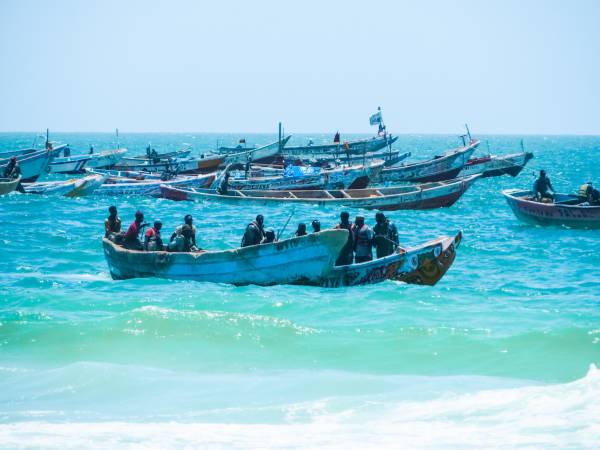
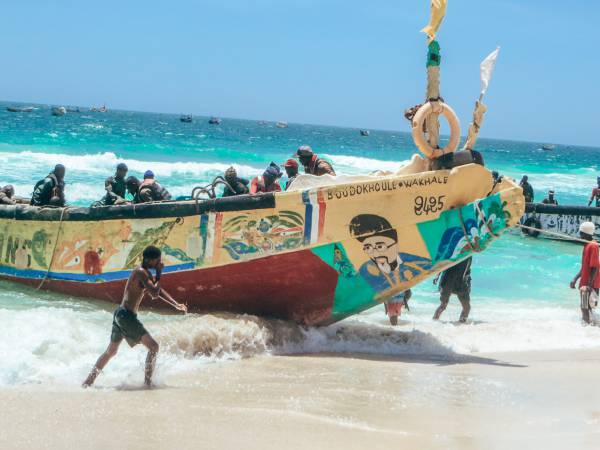
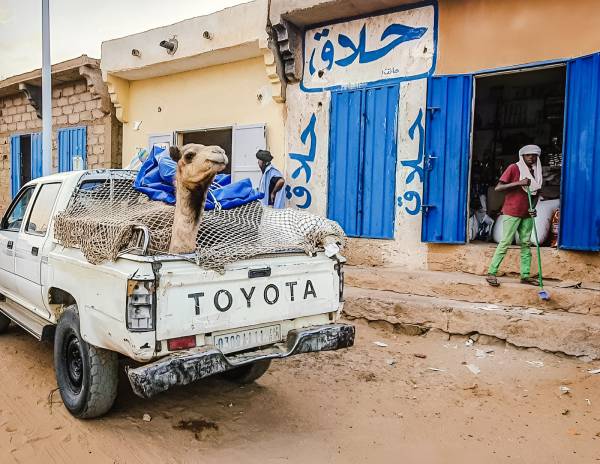
The capital Nouakchott is a bustling city located on the Atlantic coast. It was founded in the late 1950s as a small fishing village and has since grown into a vibrant city. Nouakchott's name translates to "place of the winds" in the local Hassaniya Arabic dialect, reflecting the strong sea breezes that sweep through the city. Nouakchott is characterized by low-rise buildings and sandy streets. Visitors to Nouakchott can explore the bustling markets, such as Port du Peche, the fish market where you can watch the fishermen haul in their catch and locals gutting and selling the fish next to the beach. The boats are colourfully painted and the beach is nice in places on the coast. There is also a cool camels market inland. The city is very few landmarks, including the National Museum of Mauritania.







Terjit
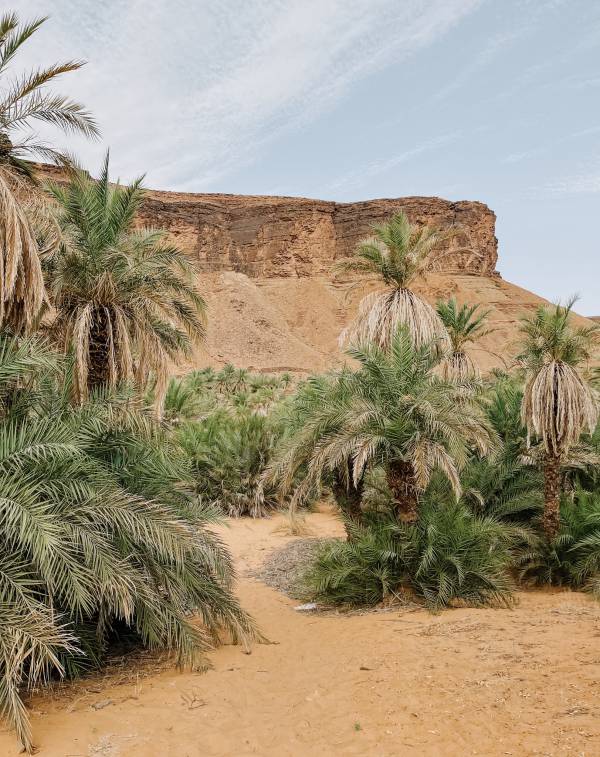
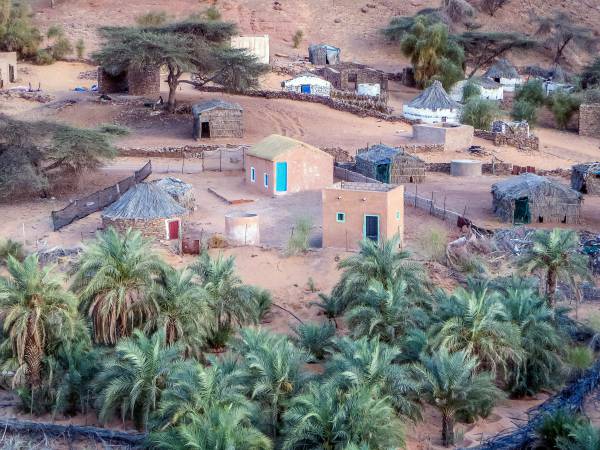
Terjit is a small village located in the Adrar Region, known for its stunning natural beauty and unique landscape. The village is situated in a desert oasis surrounded by rocky cliffs and palm trees, creating a picturesque setting. Terjit has a rich history dating back centuries, with evidence of ancient settlements and nomadic tribes who once inhabited the area. One of the main attractions in Terjit is its natural hot springs, which are believed to have healing properties. The village is also home to traditional Mauritanian architecture, with mud-brick houses.




Chinguetti
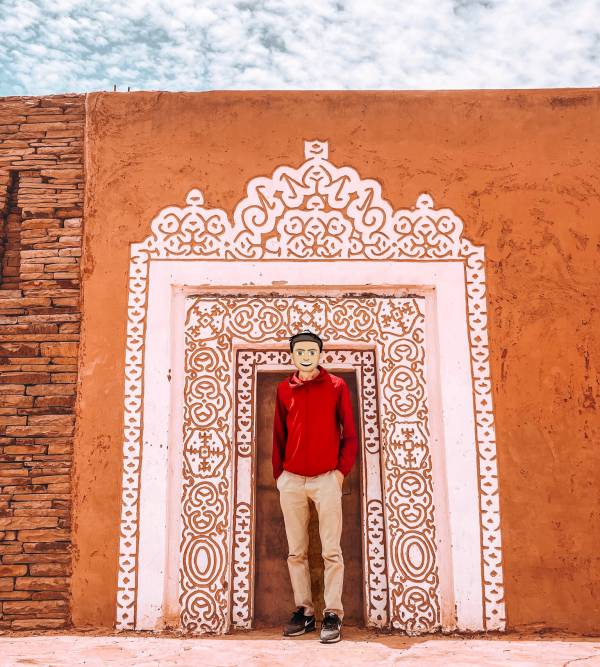
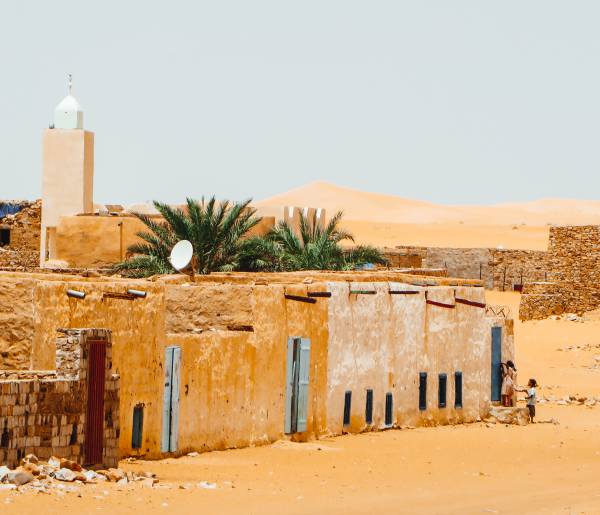
Founded in the 12th century to serve the caravans crossing the Sahara, Chinguetti was a trading and religious centre that became a focal point of Islamic culture. The town is known for its distinctive architecture, characterized by tall, sand-colored buildings made of mud bricks, which blend seamlessly with the desert landscape. Chinguetti's old town, with its narrow winding streets and ancient mosques, illustrates a traditional way of life centred on the nomadic culture of the people of the western Sahara.
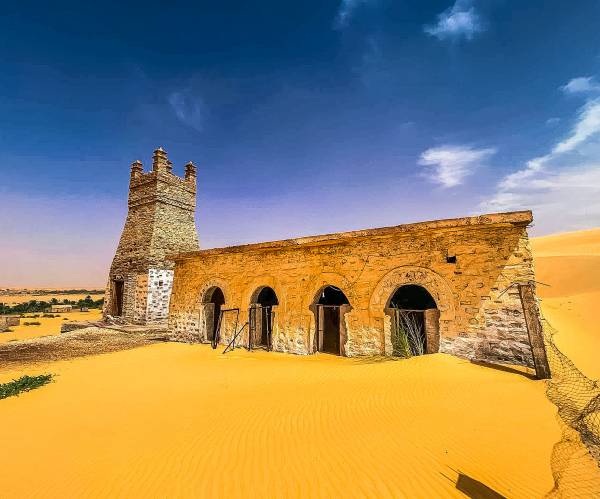
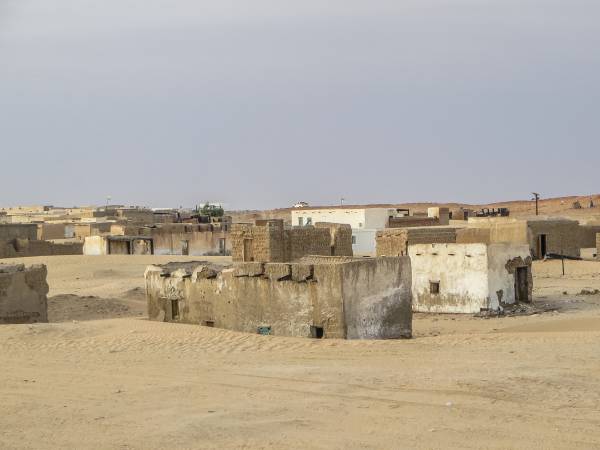
One of the most iconic sights in Chinguetti is the ancient Library of Chinguetti, considered one of the oldest libraries in the world. The library houses a vast collection of ancient manuscripts dating back to the medieval period, covering subjects such as Islamic law, astronomy, and medicine. Additionally, Chinguetti is surrounded by breathtaking desert scenery, with sand dunes stretching as far as the eye can see. The city is seriously threatened by the encroaching desert; high sand dunes mark the western boundary and several houses have been abandoned to the sand.







Iron ore train
Riding the iron ore train in Mauritania is a unique and unforgettable experience. The train, which is 2-3 kilometres long carrying tons of iron ore (in the forms of powder or chunks), is one of the longest and heaviest trains in the world. Built to transport iron ore from the mines in Zouérat to the port city of Nouadhibou, the train is a thrilling (and very uncomfortable) ride through some of Mauritania's most remote and scenic landscapes. The journey starts at the Zouerat mines, a town in the middle of Sahara, and ends after 700+ kilometres and approximately 20 hours later at Nouadhibou, a port city so that the iron ore can be loaded onto ships for export.
The train carries, besides iron, some locals; occasionally there is also a normal passengers' carriage, however, the majority of the locals just prefer hitchhiking the train by climbing into the iron ore open air wagons. Some travellers some years back discovered that one could hitchhike the train as locals do for "the experience", and it became a touristy fad ever since. While it can be a cool (yet extreme) experience, bear in mind the health dangers as you will be constantly surrounded by dusty iron ore. You will also face extreme weather conditions, from wintery cold to Sahara sun - since you don't know when exactly you will manage to catch the train you need to be prepared for any possible weather condition.
The iron ore train is not just a mode of transportation, it's a journey back in time and a test of character. Along the way, you will spot camels grazing in the desert, nomadic herders tending to their flocks, traditional villages, countless desert dunes, rocky outcrops, and expansive plains. The iron ore train leaves from Fderik outside of Zouerat in the afternoons usually anytime from 2PM to midnight, add 4h for Choum departure time. Then +16-19h to arrive in Nouadhibou.
• For those of you who don't want to be bothered with an uncomfortable near 20h ride, you can easily get away with doing a shorter version of 4h, mostly in daylight from Fderik to Choum. The ride is amazing, plus no need to pack the overnight gear in that case, best of both worlds! For sure the scenery is more spectacular on this stretch as the desert monotony is punctured by stunning rock and sand dune formations dotting the surroundings, vs near Nouadhibou where it is all vast plain flat sand. Just prepare an overnight stay in Choum or Atar (~1.5h away) as you'll most likely arrive after dark. This is the best option if the train departs while daylight. Unfortunately, I had catch the train in the middle of the night when it was extremely dark so the only way to get the full night & day experience was to ride all the way to Nouadhibou.
• Season: best time seems to be in Oct-Nov or Feb-March when it's not too hot during the day or too cold during the night. Dec-Jan need to prepare for cold & windy conditions, and rest of the year naturally very hot. For those who do the full night ride I heard during full moon is the best, and you can even see Ben Amera clearly about 1h after Choum.
• Preparation for full night ride: warm clothing & ideally a blanket you can wrap yourself in is a must for the night! It's also a great opportunity to sacrifice some of your well worn beloved adventure apparels and send them to garment heaven. However if you happen to like your own clothing too much fret not there is an option to raid the fashion Mecca of Zouerat. I spent 20EUR in the central market getting a bag of 2nd hand pants, shirt & jacket to not soil my own clothing with the fine iron ore dust, also a large trash bag to protect your own bag is also a must! A big wrap around blanket would be quite comfortable too for the warmth & dust protection. For food & water I got some biscuits & crackers as more fancy food would get dusty + 3 liters of water, of which I still had 0.5L left the next day. The train actually stopped several times, I counted 4 times just waiting to let opposite trains past. Can use those times for bathroom breaks as well as moulding the sandy ore to a comfortable-ish sleeping berth. Part of the ore is a bit wet as they water it to keep it from blowing away, so a ground tarp could be nice too.
• Picking the wagon: I was so confused as there is no clear station of any sort in Fderik and I just got dropped by the minibus around 12:30 by the road 400m from the train tracks. There is a train guard by the little shack who will usually invite you to drink tea and hangout while waiting for the train. At 10PM, the 2km long iron ore wagons rode past. I ended up dashing over 1km to find a spot towards the middle of the iron ore wagons (the locals call them "Ouig", and "douira" for the passenger car), in the end there was no rush as the ore wagons remained stationary for ~40min.
• The train arrived in Nouadhibou 17 hours later and there will be many taxis waiting and hustling for your business, even if you look like a dirty bum! Then you can negotiate with a hotel if you only want to take a shower.






Atar
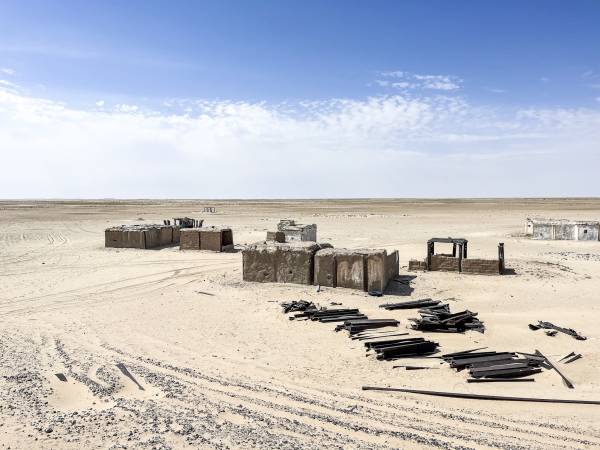
Atar is a town located in the Adrar Region. Atar's name means "well" in the local Hassaniya Arabic dialect, reflecting the presence of natural springs & oasis. The oasis produces dates and grains and supports livestock. The town also serves as a gateway to the stunning desert landscapes of the Adrar Plateau.




Shared taxis
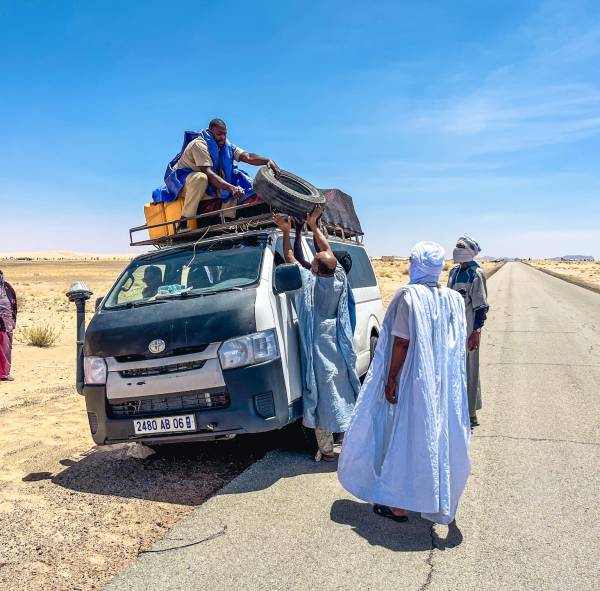
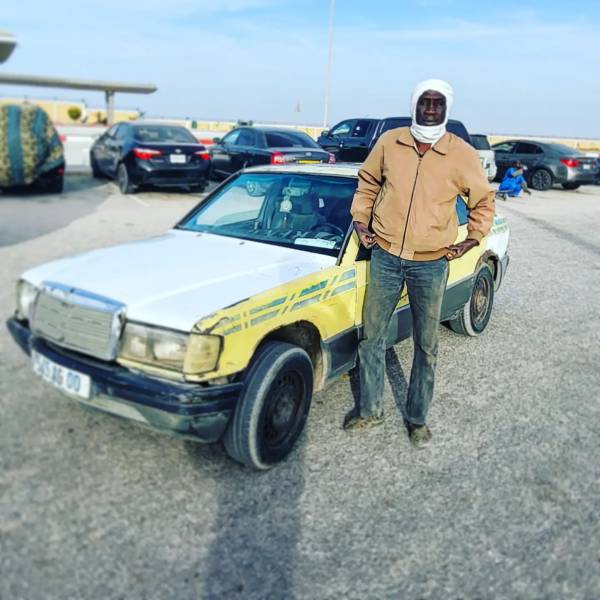
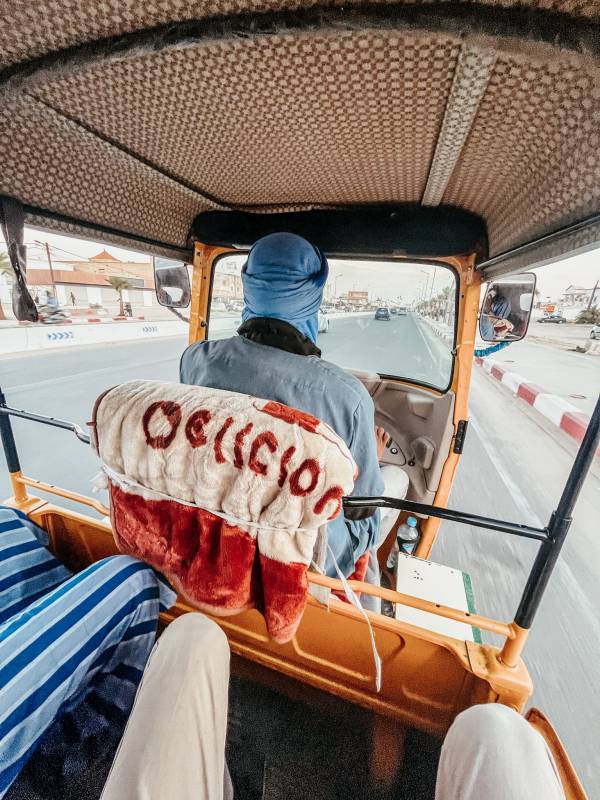
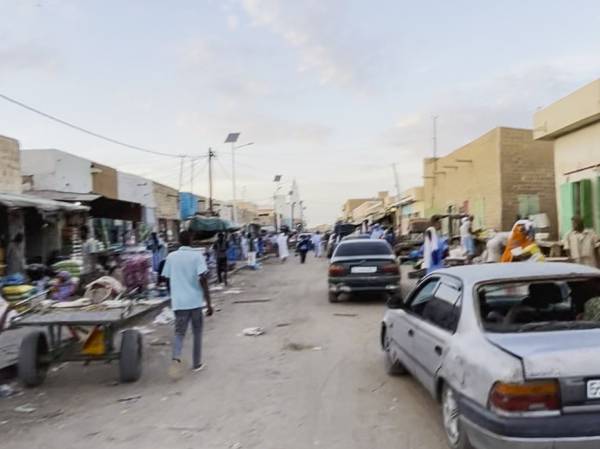
Most of the travel around Mauritania will be done by long distance minibuses. These can be found in all the towns with a few private companies offering routes, all with a similar price. A word of advice on the minibuses: try to sit at the front. It means that you will get more air from open windows than you would sitting at the back of the bus. After spending hours in a very cramped position at the back of one of these buses, the journey will not be the most comfortable. One important yet funny quirk is that when stating a price, most locals will still quote the old currency out of circulation since 2017, so instead of saying 20 they'll say 200 or 100 they'll say 1000 etc. make sure you are clear on the price in the new currency, both are called ouguiya to make it even confusing!